
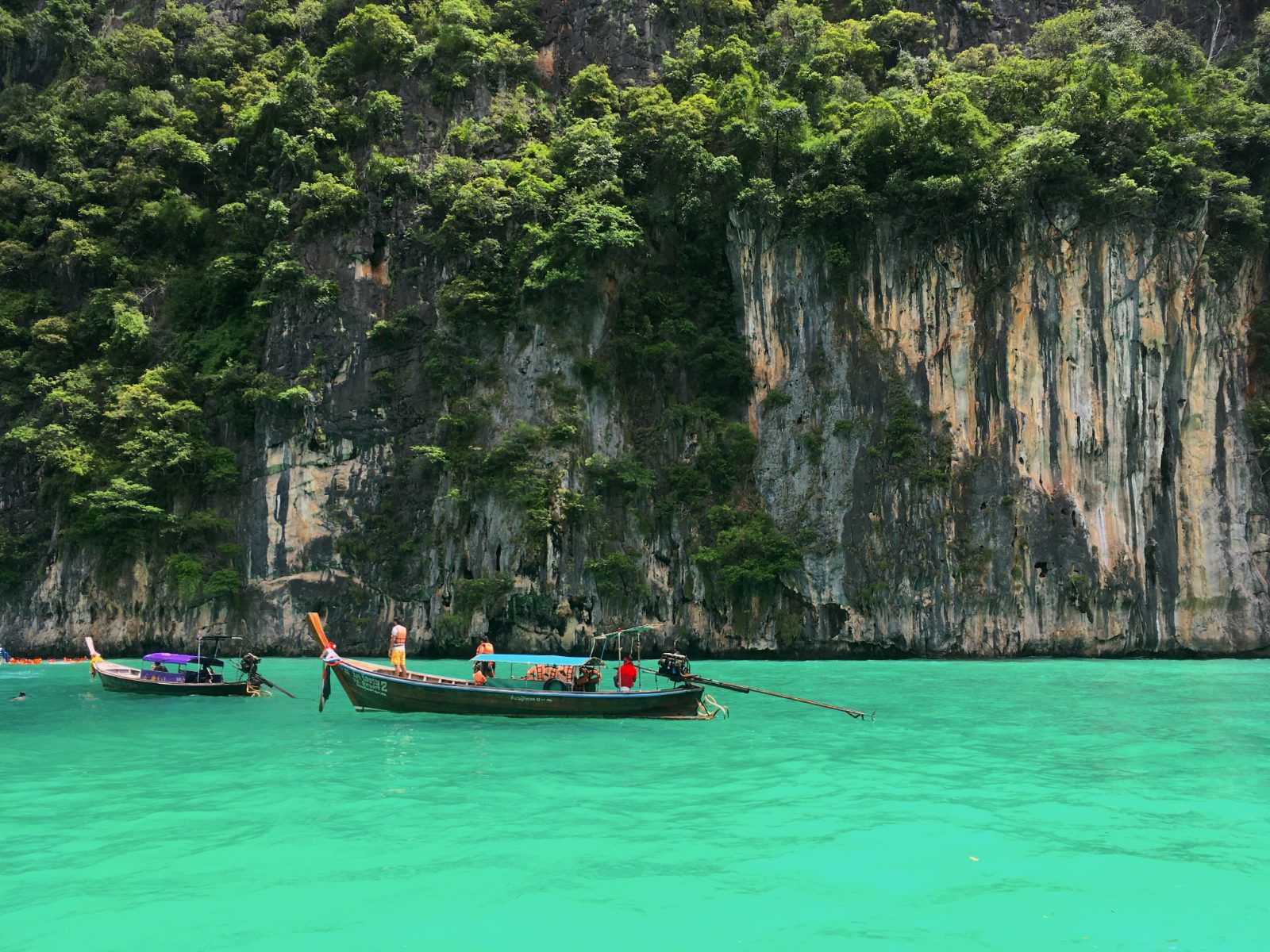
Snorkeling Phi Phi is a boat-first activity. The best reefs sit around Phi Phi Leh, Bamboo Island and the northern tip of Phi Phi Don, and most visitors reach them on a half-day longtail trip or a full-day speedboat loop. The sweet spot is November to April, when the sea is calm and the water is clearest. Maya Bay, the most famous stop, is a look-but-don't-swim beach, so the real in-water highlights are Pileh Lagoon, Bamboo Island, Monkey Beach and the reefs off Laem Thong.
This guide to snorkeling Phi Phi covers what people ask before they book: which spots are worth the boat ride, whether to join a group tour or go private, what the national park charges, which sunscreens are banned, and when the sea is too rough. Rules and fees around Phi Phi change often, so every figure below was checked against recent sources and dated 25 October 2026.
- Best season
- Nov–Apr
- Clearest water
- Jan–Mar
- Park fee
- ~฿400 / ฿200
- Swim at Maya Bay?
- No
- Easiest trip
- Half-day longtail
Short on time? Start with the easy one
A half-day longtail trip from Phi Phi Don hits the best nearby reefs and is back by lunch.
The Best Spots for Snorkeling Phi Phi
Phi Phi is two main islands plus a ring of small ones. Phi Phi Don is the larger island with the villages, beaches and hotels. Phi Phi Leh is the smaller, uninhabited island with Maya Bay, Pileh Lagoon and Loh Samah Bay. Tour boats link the highlights in a loop, so you rarely pick a single spot. You pick a route. For snorkeling Phi Phi well, knowing what each stop offers in the water helps you judge a tour itinerary at a glance.
| Spot | Where | What you see and do | Notes |
|---|---|---|---|
| Pileh Lagoon | Phi Phi Leh, ~10 min by longtail from Phi Phi Don | Sheltered emerald water ringed by cliffs. Parrotfish and sergeant majors come to the boat. | Swimming allowed, life jackets provided. Snorkeling limited to marked areas; coral is modest. |
| Bamboo Island | ~5 km off the northern tip of Phi Phi Don | Shallow fringing reef with brain and staghorn coral, sea fans, parrotfish, butterflyfish, clownfish. Turtles occasionally. | Beach wraps the whole island, many entry points. Common substitute when Maya Bay is closed. |
| Monkey Beach | Short boat ride from Tonsai Pier | Clear, shallow reef close to the sand, plus wild macaques onshore. | Do not feed the monkeys; keep bags closed. |
| Laem Thong | Northern tip of Phi Phi Don | Coral gardens a short swim from the beach. Small reef sharks occasionally reported. | Reached by regular boats from Tonsai Bay, Phuket or Krabi. |
| Hin Klang | ~2 km offshore, in front of Laem Thong | A submerged reef with plenty of fish and clear water. | Boat access only. Ask the operator if it is on the route. |
| Long Beach + the rock off it | Long Beach, Phi Phi Don | Colourful fish and blacktip reef sharks around a rock ~200 m from shore. | Currents can be strong and swell makes it risky. See the safety section first. |
| Loh Samah Bay | Phi Phi Leh, beside Maya Bay | Reputed for snorkeling and diving; also where boats now land for Maya Bay. | Often a quick stop on a longer loop. |
| Mosquito Island (Koh Yung) | ~5 km off the northern tip of Phi Phi Don | Narrow fringing reef ~700 m long, max depth 6 m, with damaged coral in places. | Reported closed to tourist boats. Confirm before paying for a tour that lists it. |
Pileh Lagoon
Pileh Lagoon is a long, narrow bay on Phi Phi Leh with cliffs rising on both sides. Boats enter through a gap in the limestone and anchor on designated buoys, with a 3-knot speed limit inside. Unlike Maya Bay next door, you can get in the water. Life jackets are provided, which makes it the easiest place on the island to take a first swim.
Be realistic about the reef itself. One Phuket travel guide describes the coral and fish here as not especially impressive, and snorkeling is only allowed in marked areas. The appeal is the setting: calm green water, the cliffs, and fish that swim up to the boat. As of March 2024 the lagoon is capped at 300 people and 50 boats at a time, and standard tours from Phuket tend to arrive between 10 am and 2 pm, when 20 to 30 boats and over a thousand people can be inside.
Beat the crowds at Pileh Lagoon
The same guide recommends roughly 6:30 to 9 am, and says sunrise tours leaving around 6 am arrive before the crowds. Another traveler guide notes the lagoon is shaded in the afternoon, a second reason to go in the morning. A private longtail or a sunrise departure gives you the most control over timing.
Bamboo Island
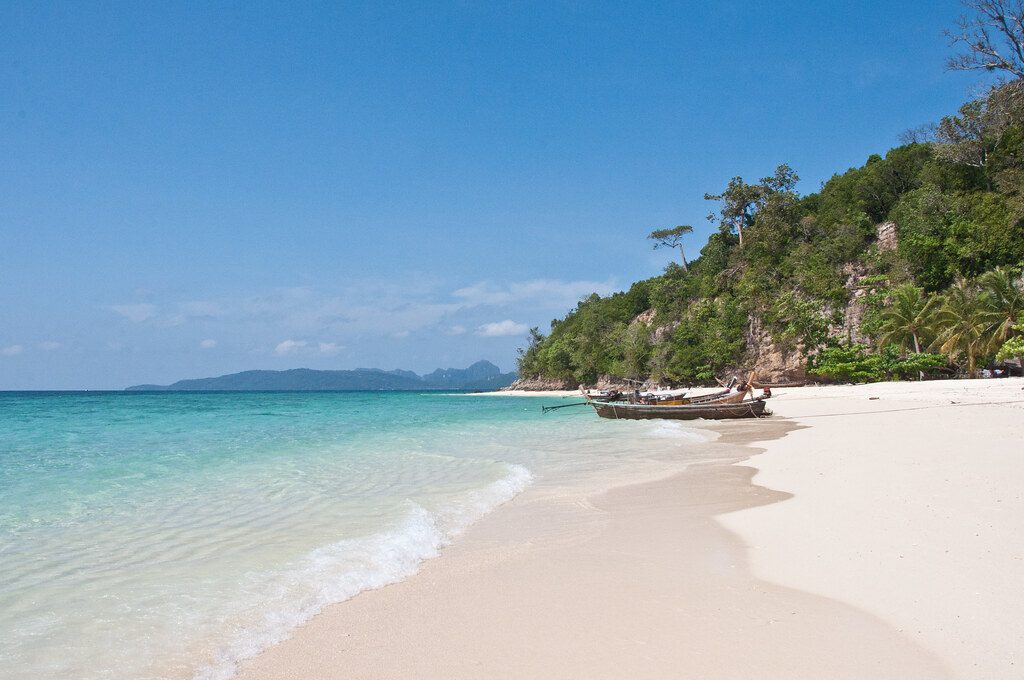
Bamboo Island (Koh Mai Phai) is the most reliable all-round stop for snorkeling Phi Phi on the standard loop. The island is small enough that a beach wraps around its edge, which gives you many places to slip into the water depending on the wind and the crowds. Reef descriptions mention brain coral, staghorn coral and sea fans, with parrotfish, butterflyfish and clownfish, and the occasional turtle.
The reef is fairly shallow, so beginners can stay comfortable and strong swimmers can range along the edge. During the annual Maya Bay closure, many operators swap in Bamboo Island as the main stop, so it can be busier than usual in August and September. Our dedicated guide to Bamboo Island covers access and day-trip options in more detail.
Monkey Beach
Monkey Beach is a short boat ride from Tonsai Pier and is usually the first or last stop on a half-day trip. The water off the beach is clear and shallow, and the reef is close enough to the sand that you can snorkel without going far. The monkeys are wild long-tailed macaques. They are used to people but they snatch food, bags and cameras, and bites happen. Keep everything zipped inside a dry bag and do not feed or touch them. More detail is in our Monkey Beach guide.
Laem Thong and Hin Klang
If you are staying in the north of Phi Phi Don, the reef at Laem Thong is the best argument for snorkeling Phi Phi without a boat tour at all. Coral gardens start a short swim from the beach, and the water is described as clear. A few kilometres offshore, Hin Klang is a submerged reef that boats can reach from this stretch of coast. Laem Thong is a quieter, more resort-style corner of the island. See our Laem Tong Beach guide for access and places to stay.
Long Beach and the rock off it
Long Beach (Hat Yao) is where many visitors first look for sharks. A rock roughly 200 m offshore draws colourful fish and blacktip reef sharks, and one traveler guide says the sharks are easiest to spot late in the afternoon when the boats have gone. The same guide warns that swell between May and October can make the swim dangerous and that currents can be strong, especially at mid-tide. If you are not a confident swimmer, go with a guide. Read our Long Beach guide for the beach itself.
Shark Bay or Shark Point? Three places share the name
Operators use different labels for the blacktip shark stop on Phi Phi routes. One full-day listing we reviewed calls it Shark Point, while the GetYourGuide tour below lists a Shark Bay stop, so confirm on that listing what you will actually see. Separately, Shark Point (Hin Musang) is a scuba site about 27 km east of Phuket, named for its leopard sharks and aimed at divers. Check the stop list on any listing so you know which one you are buying.
Snorkeling Phi Phi by Boat: Tours Compared
Four formats cover almost every plan for snorkeling Phi Phi, and the right boat shapes the whole day. The right one depends on where you sleep, how much time you have, and how much you mind sharing the water with other boats.
- Half-day longtail from Phi Phi Don. Cheapest and simplest if you are already on the island. A handful of nearby stops in a few hours.
- Full-day loop. One full-day listing we reviewed runs about 11 hours: Monkey Beach, ~2 hours at Bamboo Island, Viking Cave, Pileh Lagoon, Loh Samah Bay, a blacktip shark stop, then sunset and a plankton swim. Itineraries differ, so read the stop list.
- Speedboat from Phuket or Krabi. Faster crossing (~45–90 min each way from Phuket), but less time in the water and arrival in the busiest part of the day.
- Private longtail. The most flexible. You set the start time, so you can reach Pileh Lagoon before the crowds. The park fee is usually not included and paid in cash.
If you are still choosing between formats, our guide to Phi Phi island tours compares them side by side, and the island hopping guide covers longtail and speedboat routes. Two trips we think work well for snorkeling, with the photos straight from each listing:
Phi Phi: Half-Day Snorkeling Trip by Longtail Boat
A short, low-commitment way to get in the water when you are already staying on Phi Phi Don.
Check on the listing before you book
- The stop list, so you know which reefs are included
- Departure pier and time
- Whether the national park fee is included
Powered by GetYourGuide. Price, duration and availability depend on your date.
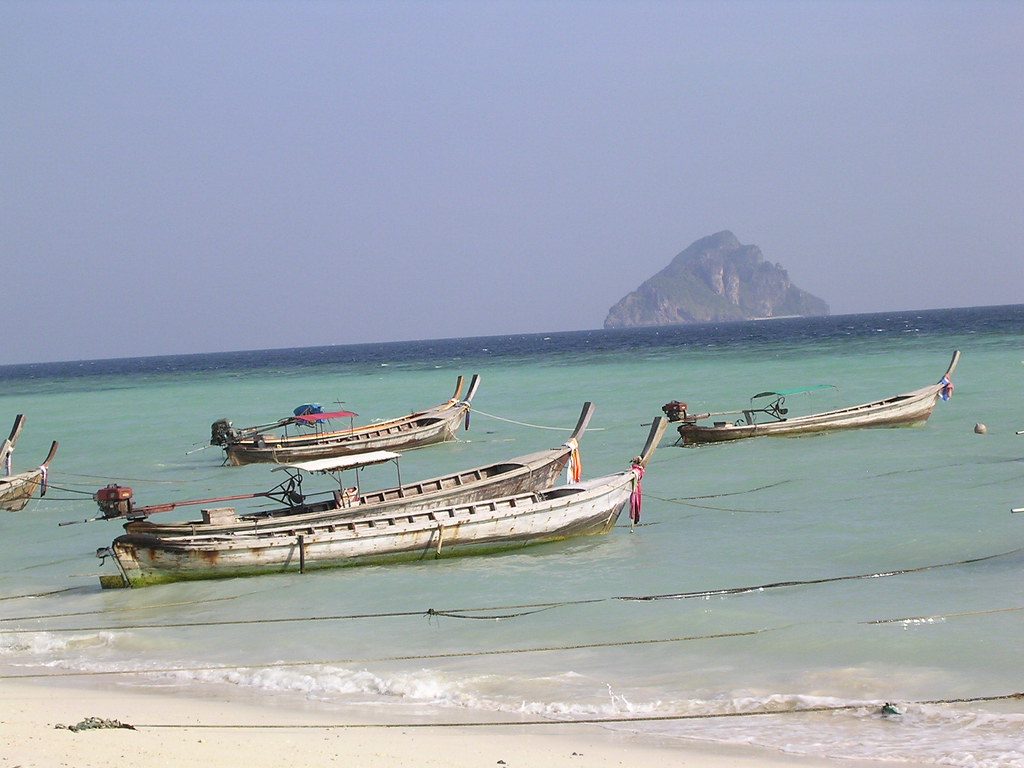
Longtail boats are slower and quieter than speedboats, and the open design means you can slide into the water at each stop. Speedboats cover more ground in less time, which suits people with one day, but the pace leaves less time at each reef.
Phi Phi, Maya Bay & Shark Bay Snorkeling Tour
Combines a Maya Bay landing with in-water time. Maya Bay is a photo stop, so the swimming happens at the other spots.
Check on the listing before you book
- Which stops are in the water vs landing only
- How it handles the Maya Bay closure (1 Aug–30 Sep)
- Whether the national park fee is included
Powered by GetYourGuide. Price, duration and availability depend on your date.
Questions worth asking any operator
How many snorkel stops, and how long at each? Is the park fee included? Will we reach Pileh Lagoon before 9 am or after 10? What happens if the sea is rough? Operators that answer these clearly tend to run better trips.
Snorkeling Phi Phi Without a Tour
You do not have to join a boat tour to enjoy snorkeling Phi Phi. If you are staying several nights, shore snorkeling is cheaper and lets you pick the best tide and light. The catch is that the best reefs are scattered, and conditions vary a lot by season. Check with your hotel on the day, and read our guide to where to stay if you are choosing a base for the reef.
- Laem Thong Beach. The strongest shore option. Coral gardens start a short swim from the beach, with parrotfish, butterflyfish and clownfish reported.
- Long Beach. Snorkel toward the rock offshore only in calm conditions and with a buddy. Swell and mid-tide currents are the main risk.
- Moo Dee Bay. East coast of Phi Phi Don, white-sand beach ~500 m long. One traveler guide says the snorkeling is mostly at both ends of the bay, and that it is a way to avoid crowds.
- Monkey Bay (Ao Ling). A small cove near the entrance of Dalum Bay with a reef ~50 m from the beach. The same guide says it works best when the tide is right.
Do not swim out to deeper water alone
Currents around headlands can be stronger than they look, especially in the monsoon months. Wear a life jacket or swim vest if you are not a strong swimmer, stay close to shore, and never snorkel alone from Long Beach.
Snorkeling Phi Phi at Maya Bay: What You Can and Can't Do
Maya Bay is the reason many people book a Phi Phi trip, and it is also where first-time visitors are most surprised. After years of closure for coral recovery, the bay reopened under strict visitor controls. Boats no longer enter the bay. They tie up at the pier in Loh Samah Bay on the back of the island, and you walk about 300 m along a boardwalk to the beach. Our full guide to Maya Bay covers access in detail, and the Phi Phi Leh guide covers the rest of the island.
| Maya Bay rule | What it means for you |
|---|---|
| Swimming | Not allowed. You can wade to about knee depth. |
| Time on the beach | About one hour per visit. |
| Visitor cap | Reported at 375 people per one-hour round, roughly 4,125 a day. |
| Opening hours | 07:00 to 18:00. |
| Annual closure | 1 August to 30 September 2026, according to Qbic Travel; reopening targeted for 1 October. Also covers Loh Samah and Lo Ko. |
| Park fee | Commonly cited at ฿400 per adult and ฿200 per child. |
What to do about it
For snorkeling Phi Phi, pick a tour that spends at least two stops in the water, such as Bamboo Island plus Pileh Lagoon, rather than one that promises Maya Bay swimming. During the closure months, boats pass Phi Phi Leh from the water and typically swap in Bamboo Island, which is a fine trade for snorkelers. Any listing that claims swimming at Maya Bay should be treated with suspicion.
Best Time for Snorkeling Phi Phi
For snorkeling Phi Phi, the dry season, roughly November to April, brings the calmest seas and the clearest water. Within it, mid-January to mid-March is the best window, with February the driest month. Visibility is reported to build toward about 30 m during the peak months. In summer it drops to roughly 10 to 15 m. For month-by-month weather beyond the sea, see our best time to visit Koh Phi Phi guide.
| Period | Sea and boats | Visibility and notes |
|---|---|---|
| Dec–Feb | Seas flatten out and trips run reliably. | Visibility climbing toward ~30 m. Biggest crowds around the holidays. |
| Mar–Apr | Excellent for snorkeling, especially March. April sees more showers. | Near the annual best through April. Fewer visitors than peak season. |
| May | Afternoon squalls can cut longtail trips short, though Pileh Lagoon and Bamboo Island tours still run. | Lower prices and fewer people. |
| Jun–Aug | Southwest swell and choppy crossings possible. Dive centres use sheltered sites. | Visibility around 10 to 15 m. |
| Sep–Oct | Choppier seas. Some longtail operators cut schedules on rough days. | Low crowds and discounts, but the least predictable water. |
| Late Nov | The monsoon retreats and skies begin to clear. | Crowds start to build again. |
For snorkeling Phi Phi, time of day matters nearly as much as month. Calm mornings give flat water and better light, and popular stops like Pileh Lagoon and Bamboo Island are quieter before the Phuket speedboats arrive. In the monsoon months, book flexible tickets and be ready to move your trip a day if the sea is rough.
Planning around the weather?
Compare live dates for the Maya Bay & Shark Bay tour and pick a calm morning.
Snorkeling Phi Phi Costs: Park Fee, Tours and Extras
The cost of snorkeling Phi Phi changes with the season, the boat type and the group size you pick, so check the live price on the listing for your date rather than trusting a number from a guide. What does not change much is the national park fee for Hat Noppharat Thara – Mu Ko Phi Phi National Park. Commonly cited rates for foreign visitors are ฿400 per adult and ฿200 per child, and Pattaya Mail reported in 2017 that these fees had been unchanged for years. One visitor guide says the fee covers Maya Bay, Phi Phi Leh and Bamboo Island.
| Cost item | How it usually works |
|---|---|
| National park fee | ฿400 adult / ฿200 child is the commonly cited rate. Large group tours often include it. Private longtails usually do not, and want cash. |
| Snorkel gear | Mask and life jacket are often provided. Shared masks may fit poorly, so consider bringing your own. |
| Food and water | Varies by operator. One full-day listing includes a lunch box, fruit and water. Others do not. |
| Insurance and guide | Check the listing. Some include accident insurance and a guide. |
| Sunscreen | Buy a compliant product before you go. See the rules section below. |
| Tips and small spends | Carry small baht notes for drinks, tips and the park fee when it is not included. |
When two tours look similar, the real price difference is usually in what is left out. A cheaper ticket that excludes the park fee, lunch and gear can cost more than a pricier one that bundles them. Compare the inclusions line by line.
Snorkeling Phi Phi Rules: Sunscreen Ban and Reef Etiquette
The sunscreen ban
Thailand banned coral-damaging sunscreens in marine national parks, with the first announcement in August 2021. Enforcement was restated in October 2025. The banned ingredients are oxybenzone, octinoxate, 4-methylbenzylidene camphor and butylparaben, and tourists using sunscreens with them can face fines of up to ฿100,000, according to Khaosod English. Earlier coverage from the Bangkok Post describes how the rule started.
Read the ingredient list before you leave your hotel. Mineral sunscreens based on zinc oxide or titanium dioxide are the usual alternative, and a long-sleeved rash guard cuts the amount of sunscreen you need at all. Rinse off any lotion before you get in the water.
Check the label, not the front of the bottle
A bottle marked reef-friendly can still contain a banned ingredient. Look for the four chemical names in the ingredients list.
Reef etiquette
A few habits protect the reefs that make snorkeling Phi Phi worth the trip.
- Do not stand on coral or touch it. Even a light kick from a fin can break it.
- Do not feed the fish. Feeding raises clouds of sand and reduces visibility, and changes how fish behave around boats.
- Do not take shells, coral or sand. Most of the sites on this page are inside a national park.
- Boats must use designated buoys at sites like Pileh Lagoon. Do not ask your captain to anchor on the reef.
Monkeys and sharks
Macaques at Monkey Beach are wild. Do not feed or touch them, and keep food and cameras zipped up. Blacktip reef sharks are the other animal people ask about. Thai PBS World reported a school of them in knee-deep water around Phi Phi beaches in 2018, and IslaGuru describes them as harmless to people. Even so, give them space. Do not chase, grab or feed them, and keep your hands out of the water if you are unsure.
What to Bring for Snorkeling Phi Phi
Packing for snorkeling Phi Phi is simple, and a few items make a real difference on the boat.
- Your own mask and snorkel. Shared rentals may fit badly, and a leaking mask ruins a stop.
- Compliant mineral sunscreen and a UV-protective rash guard or long-sleeved swim top.
- A dry bag for phones, cash and cameras. Landings can be splashy and monkeys target open bags.
- Small baht notes for the park fee, drinks and tips.
- A towel, a hat and drinking water.
- Seasickness tablets if you are prone to it, especially for speedboats in the monsoon months.
- A waterproof phone pouch or underwater camera.
You do not need much more than that. Fins can help in a current, but kicking them over shallow reef breaks coral, so keep your body flat and your kicks gentle.
Is Snorkeling Phi Phi Safe?
Snorkeling Phi Phi is safe for most people on an organised trip, and tours are the best choice for beginners. The risks are mostly about water movement and boat traffic rather than marine life. Four habits cover most of them.
- Respect the current. Water can move faster than it looks around headlands, particularly in the monsoon months. If you feel pulled, swim across the flow rather than against it and signal the boat.
- Wear the life jacket. Tours provide them, and they are worth using if you are a weak swimmer or the sea is lumpy.
- Stay near the boat and guide. Stops can be busy with several boats. Look up often, and keep away from any boat that is moving.
- Skip rough days. If the operator offers a move to another day or a sheltered stop, take it. Swell makes shore swims at Long Beach particularly unwise.
If you have never snorkeled, say so when you book. A guide can pick a calmer stop and stay with you. Heat is the other quiet risk. Drink water and reapply compliant sun protection between stops.
Snorkeling Phi Phi or Scuba Diving?
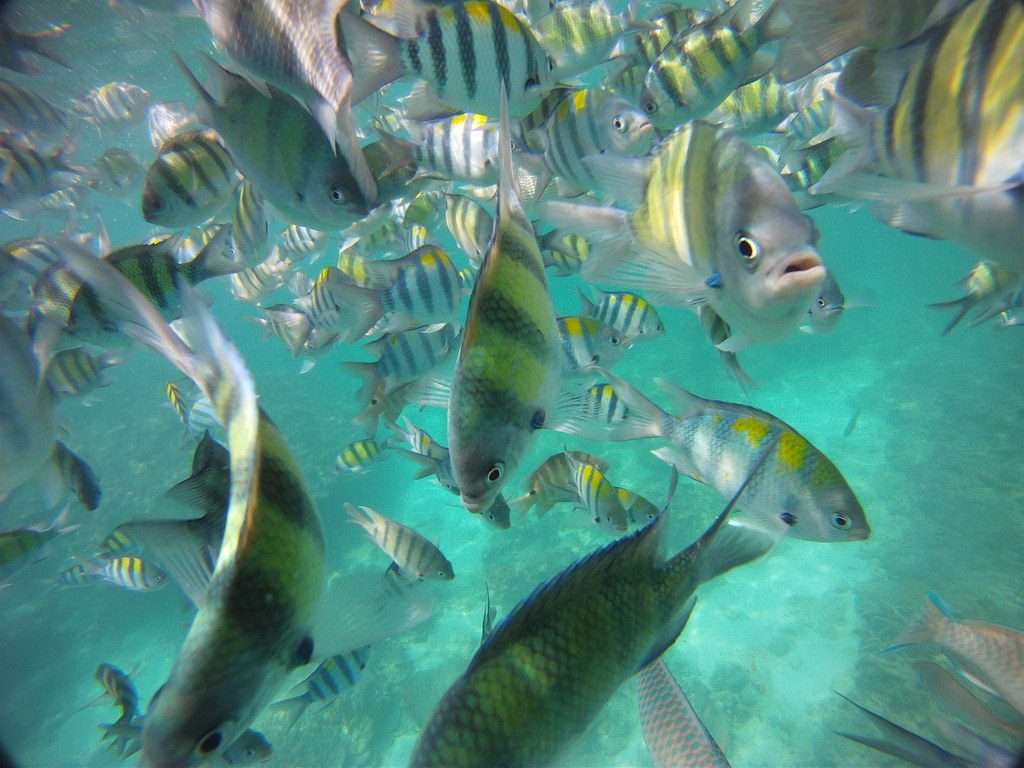
Snorkeling Phi Phi shows you the top few metres of the reef, which is where most of the colour is on Phi Phi. Scuba diving opens up deeper sites and larger animals, but it needs training and costs more. If you want a taste of both, a beginner discover scuba trip is an option. Our Phi Phi diving guide covers schools and sites.
Shark Point (Hin Musang) is the best known example of what diving adds. It sits about 27 km east of Phuket, and divers go there for leopard sharks, with an average depth of 12 m and a maximum of 25 m, according to Private Scuba. The deepest pinnacle is not suited to beginners, which is why it appears on dive itineraries rather than snorkeling ones.
Sample Plans for Snorkeling Phi Phi
Four easy ways to organise your time for snorkeling Phi Phi, depending on where you stay.
One morning, staying on Phi Phi Don
Book the half-day longtail trip and take the earliest departure. Aim to have Monkey Beach, Bamboo Island or Pileh Lagoon before the speedboats arrive. Back by lunch, then spend the afternoon on the beach or at the viewpoint.
A full day with sunset
Choose a full-day loop that includes at least two swimming stops and ends with sunset. Some trips finish with a swim among bioluminescent plankton after dark. Bring a dry layer for the boat ride back.
Staying in the north
Swim from Laem Thong Beach in the morning when the water is calm, then add a boat to Bamboo Island or Hin Klang if you want more variety. This suits travelers who prefer quiet beaches over a crowded tour loop.
A day trip from Phuket or Krabi
You arrive at the busiest time, so a private or small-group trip is worth the extra cost if you can afford it. Staying one night on Phi Phi gives you the early start, which matters more than any other choice. See how to get to Koh Phi Phi and our Phi Phi day trip guide for transport and timing.
Snorkeling Phi Phi FAQ
Where is the best place for snorkeling Phi Phi?
Bamboo Island is the most dependable stop on standard tours, Pileh Lagoon has the most dramatic setting, and Laem Thong has the best reef you can swim to from the beach. The best choice depends on whether you travel by boat.
Can you snorkel at Maya Bay?
No. Swimming is not allowed at Maya Bay and visitors may wade to knee depth only. Tours stop there for a short visit, and the snorkeling happens at other stops.
Is snorkeling Phi Phi good for beginners?
Yes, on an organised trip. Pileh Lagoon is calm and sheltered, life jackets are provided on tours, and Bamboo Island has shallow reef. Tell your guide you are a beginner so they can keep you close.
What is the best time for snorkeling Phi Phi?
November to April, with mid-January to mid-March the calmest and clearest. In May to October, swell and rain can cut trips short or reduce visibility.
Do I need to pay a national park fee?
Most visitors do. The commonly cited rate for foreign visitors is ฿400 per adult and ฿200 per child. Group tours often include it, private longtails usually do not, so check before you book.
Are there sharks when snorkeling Phi Phi?
Blacktip reef sharks are seen around parts of Phi Phi, including a stop on many tour routes. Guides describe them as harmless to people. Keep your distance and never chase or feed them.
Which sunscreen can I use?
Avoid anything containing oxybenzone, octinoxate, 4-methylbenzylidene camphor or butylparaben. Fines of up to ฿100,000 are possible in Thai marine national parks. A rash guard reduces how much you need.
Is Mosquito Island open for snorkeling?
One snorkeling reference reports it closed to tourist boats by the Department of National Parks, with no reopening date given. Confirm the current status with an operator before choosing a tour that lists it.
How long does a snorkeling trip take?
A half-day trip is several hours. Full-day loops can run longer, and one listing we reviewed lasts about 11 hours including sunset and a plankton swim. Always check the duration on the listing.
Ready to book your snorkeling trip?
Start with the half-day longtail if you are staying on Phi Phi, or the Maya Bay & Shark Bay tour for a fuller day.
Keep planning with our Koh Phi Phi guide, the list of things to do in Koh Phi Phi, and the best beaches in Koh Phi Phi.
Photo credits: Pileh Lagoon by Puripant (CC BY-SA 4.0, Wikimedia Commons); Bamboo Island by Mark Fischer (CC BY-SA 2.0, Flickr); reef by OsvaldoROVE (CC BY 2.0, Flickr); longtail boats by Shazron (CC BY 2.0, Flickr). Tour photos: GetYourGuide.
Disclosure: InsideSamui may earn a commission when you book through some of the links on this page, at no extra cost to you. This guide is compiled from published park and operator information, checked on 25 October 2026. We have not run these tours ourselves for this page. Prices, fees, closure dates and rules around Koh Phi Phi change often, so confirm with your operator before you travel.
2 Responses