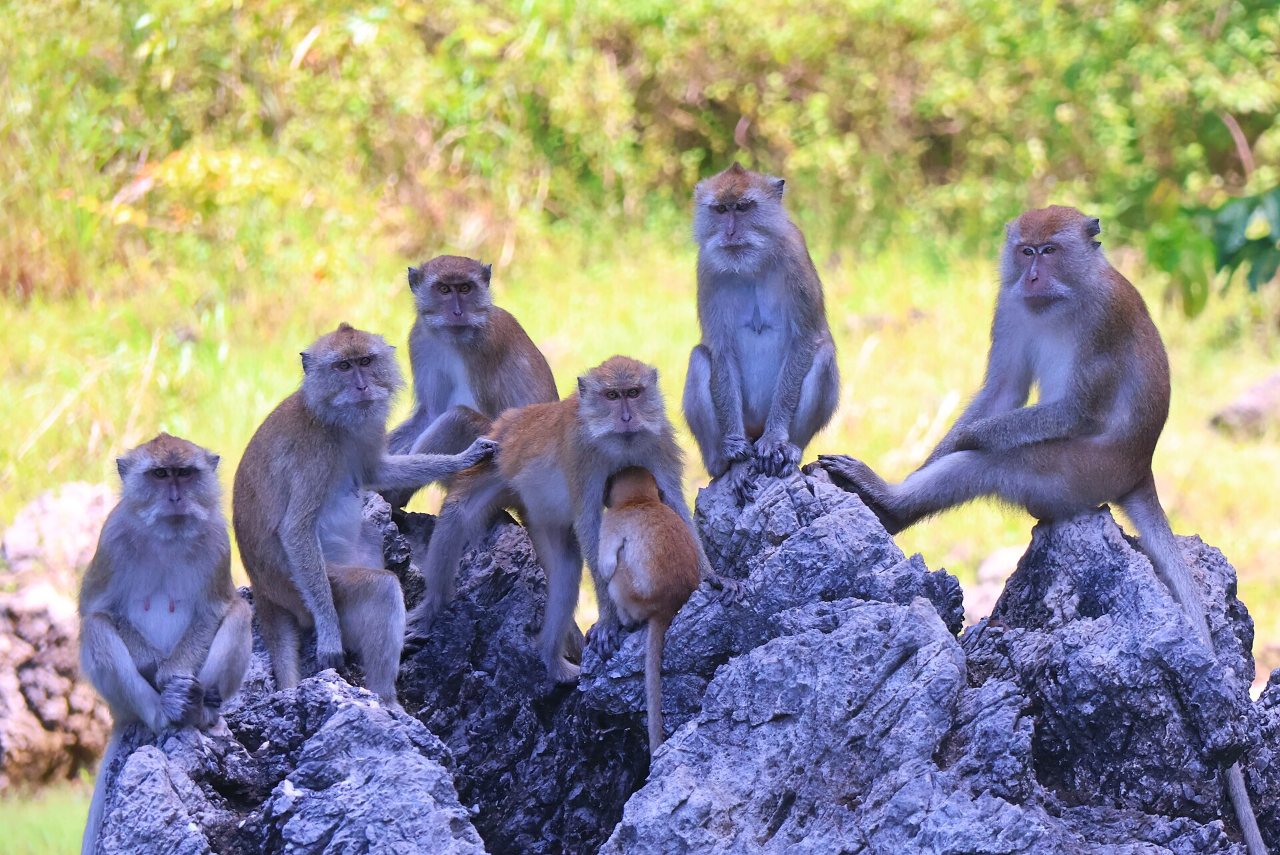
Monkey Beach Phi Phi is a small white-sand cove on the west side of Phi Phi Don where wild long-tailed macaques live on the cliffs and come down to the sand. You reach it by boat or kayak, most visitors stop for a short time on a longtail tour, and the main rule is simple: do not feed the monkeys.
This guide explains where the cove is, how to get there by tour, private longtail or kayak, what the park's feeding ban means in practice, how to avoid bites and stolen bags, and when to go. It draws on Hotels.com, Touropia, Nothing Familiar, The Nation Thailand, Pattaya Mail, the CDC Yellow Book and a GetYourGuide listing that we checked on 29 October 2026. Prices and park rules change, so confirm them before you go.
- Where
- West side of Phi Phi Don
- Beach
- About 150 m of white sand
- Kayak paddle
- 40 to 50 minutes
- Private longtail
- ฿1,500 to ฿3,000 a trip
- Half-day tour
- From about €19
- Feeding fine
- ฿1,000, shown on park signs
Is Monkey Beach in Phi Phi worth visiting?
Yes, as a short stop on a longtail or snorkeling trip. The macaques are the attraction and the water is clear and shallow. It is not a place to spend a day, because facilities are minimal and the monkeys are wild, so keep food out of sight and keep your distance.
Monkey Beach Phi Phi at a Glance: Location, Sand and Macaques
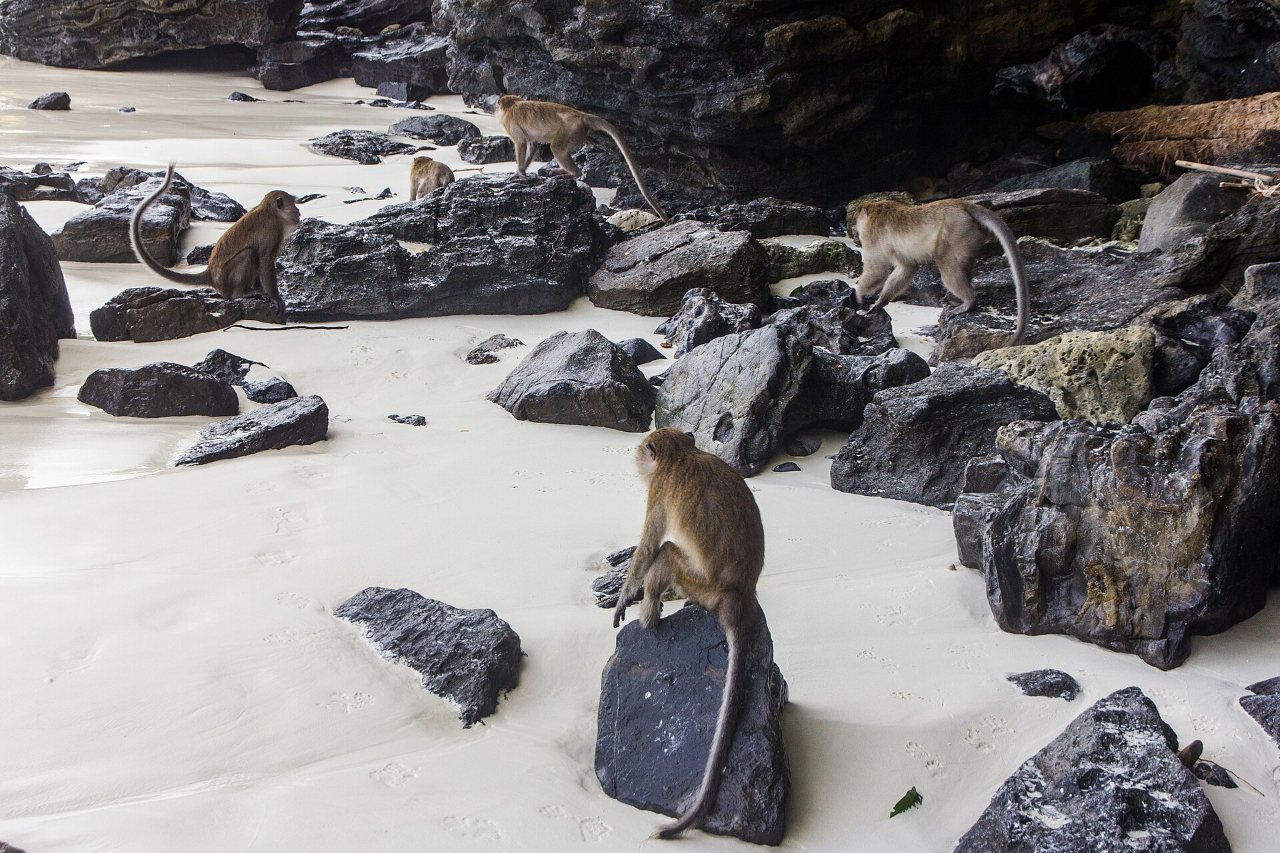
Touropia calls Monkey Beach, also known as Ao Ling or Monkey Bay, a hidden cove northwest of Loh Dalum Bay. Hotels.com describes a strip of fine white sand of about 150 metres, clear green-blue water and a steep, vegetated limestone cliff behind it, which is where the monkeys live. It puts the cove roughly 700 metres from the Tonsai jetty.
There are no hotels, restaurants or shops on the beach. Most people sleep in Ton Sai Village and visit Monkey Beach Phi Phi by boat for an hour or less, so plan the cove as one stop in a day, not a full day on its own.
| What | Detail |
|---|---|
| Also called | Ao Ling, Monkey Bay |
| Location | West side of Phi Phi Don, northwest of Loh Dalum Bay |
| Beach | About 150 m of fine white sand, with a cliff behind |
| Tide | Little sand left at very high tide, according to Touropia |
| Water | Clear, green-blue and shallow, good for snorkeling |
| Facilities | Minimal, so bring water |
| Wildlife | A colony of wild long-tailed macaques |
For the wider island, our guide to things to do in Phi Phi shows where the cove fits, and our guide to the best beaches in Phi Phi compares it with the sandier bays.
How to Get to Monkey Beach Phi Phi: Tour, Longtail or Kayak
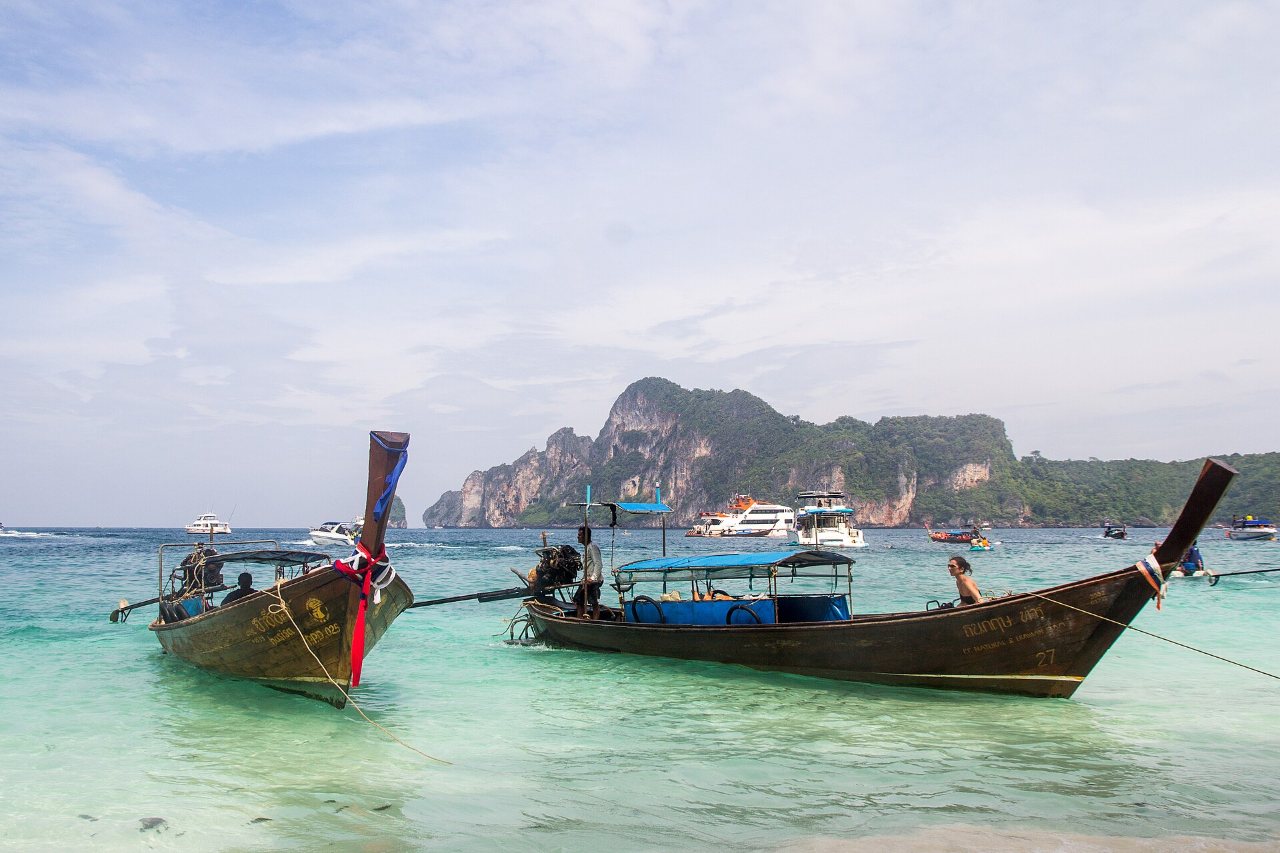
There is no road to Monkey Beach Phi Phi. Hotels.com says the easiest option is a longtail boat from the Tonsai jetty, and Touropia lists a charter from Loh Dalum, a canoe or walking. In practice most visitors arrive on a tour boat, because Monkey Beach is a regular stop on island trips.
| Option | Cost | Time | Notes |
|---|---|---|---|
| Half-day longtail tour | From about €19 a person | 4 hours in total | Monkey Beach is the first stop; park fee included on the listing below |
| Private longtail charter | ฿1,500 to ฿3,000 | Depends on the stops | Phuket 101 gives this range for island trips; agree the price first |
| Sea kayak | About ฿100 an hour to rent | 40 to 50 minutes of paddling | Rent at Loh Dalum Beach; not possible there at low tide |
| On foot | Free | 20 to 40 minutes | Adventure Collective mentions a jungle trail from Ton Sai; we could not confirm its condition |
By longtail boat
Hotels.com puts the cove about 700 metres from the Tonsai jetty, so a charter is short. Phuket 101 says renting a longtail on Phi Phi costs around ฿1,500 to ฿3,000 depending on what you want to visit, and a commenter on Nothing Familiar quoted ฿2,000 for a customized trip in 2022. Ask the captain to include Monkey Beach and agree the total before you board. For longer routes, see our guide to Phi Phi island hopping.
By kayak
Hotels.com describes a paddle of about 40 minutes, while Nomadasaurus puts it at around 50 minutes and quotes rentals at about ฿100 an hour. Nothing Familiar warns that Loh Dalum Beach is too shallow to kayak from at low tide, so ask the rental shop about the tide, and go first thing in the morning, before the tour boats arrive.
On a tour
Boat tours are the simplest way to see Monkey Beach Phi Phi with a guide, and our guide to Phi Phi island tours compares the main options. Check the itinerary, because not every tour stops at Monkey Beach, and a full-day trip usually adds Maya Bay and Bamboo Island.
Monkey Beach Phi Phi Rules: Why You Must Not Feed the Macaques
Feeding the macaques at Monkey Beach Phi Phi is banned. The Nation Thailand reported on 5 May 2025 that Hat Noppharat Thara–Mu Ko Phi Phi National Park had publicized a case of a foreign tourist feeding potato chips to macaques at a monkey bay on Phi Phi Don, while others filmed and laughed. The article says warning signs in Thai, English and Chinese state a fine of ฿1,000.
Pattaya Mail adds the park's reasons. Feeding disrupts natural behaviour, makes the animals more prone to disease and reduces their ability to find food, and hungry monkeys may turn aggressive. It says violations are subject to penalties under the National Parks Act of 2019, that the park increased surveillance where feeding is common and that it works with tour operators and guides to promote the rules.
What the rules mean for your visit
- Do not hand over, drop or leave food, including fruit, crisps and sweets.
- Do not carry open food on the beach. Keep snacks sealed in a bag on the boat.
- Do not try to touch or pose with the animals.
- Follow your guide or boat captain, who works with the park on these rules.
Nothing Familiar notes that for years travelers fed the monkeys at this beach, and Hotels.com says the macaques now expect food. That habit is why they approach visitors, and why the ban matters. Entry rules are separate: Thai National Parks lists a park fee of ฿200 for adults and ฿100 for children, and no source we found lists a separate fee for the cove. Tours often include it, as the listing below does.
Staying Safe at Monkey Beach Phi Phi: Bites, Bags and Tides
The monkeys at Monkey Beach Phi Phi are used to people but they are not tame. Nothing Familiar calls them wild animals that can be extremely dangerous, and describes a monkey chasing a mother and son into the sea and a group of five ripping through a snorkeler's gear. Hotels.com says bites and scratches are common and painful, and that a rabies vaccine may be needed after a bite.
Protect your things
- Leave bags on the boat, or keep them zipped and out of reach. Nothing Familiar saw monkeys go through belongings left in kayaks.
- Keep food out of sight, as Gecko Routes advises, because the monkeys will try to steal it.
- Use a dry bag for valuables during boat transfers, which also protects them from spray.
- Do not leave snorkel gear or cameras on the sand.
If you are bitten or scratched
The CDC Yellow Book says macaques can carry B virus and that immediate cleaning of bite and scratch wounds is of utmost importance. It advises scrubbing with soap and water, then irrigating with running water for 15 to 20 minutes, and seeking medical care for possible post-exposure treatment. Do this on the boat if you can, and see a doctor the same day. The CDC also advises travelers to avoid feeding or petting these animals.
Check the tide and the sea
Touropia says there is little beach left at very high tide, and Nothing Familiar says kayaking from Loh Dalum is impossible at low tide. Check both with your rental shop or captain, and skip kayaking in rough weather. Our guide to the best time to visit Phi Phi explains the seasons.
What to Do at Monkey Beach Phi Phi: Watch the Macaques and Snorkel
Most visitors to Monkey Beach Phi Phi come to watch the monkeys from a distance, take photos and cool off in the shallow bay. Hotels.com says snorkeling is the main draw, with abundant marine life in the shallows, and Gecko Routes says the clear water has coral and sea life, so bring a mask. Nothing Familiar's authors swam but did not get close to the monkeys, which is good advice.
Photograph the macaques without feeding them
Stand back, use a zoom lens or your phone's zoom, and let the animals come and go. Do not crouch with food or an open bag, and do not turn your back on a group that is close. Nothing Familiar recommends keeping a safe distance.
Snorkel in the shallows
The water is shallow, so keep your gear close to you and stay near the boat. Use reef-safe sunscreen and check our guide to snorkeling in Phi Phi, which explains the banned filters and the best reefs.
Combine it with other stops
Phuket 101 lists Monkey Beach among the usual boat stops, with Maya Bay, Viking Cave, Loh Dalum Bay and Bamboo Island. Our guides to Maya Bay and Bamboo Island Phi Phi cover those stops.
Best Monkey Beach Phi Phi Tour: A Half-Day Longtail Trip
If you want a guide and a fixed itinerary, a half-day longtail tour from Ton Sai is the simplest way to see the cove. This listing starts at Monkey Beach and then continues to the other bays.
From Phi Phi: Half-Day Longtail Boat Snorkeling Tour
A four-hour trip with a guide in a traditional longtail. It starts at Monkey Beach, then continues to Viking Cave and Pileh Lagoon, with snorkeling stops at Loh Samah Bay and Maya Bay.
Check on the listing before you book
- Meets near Ton Sai Pier, at McDonald's PP Island
- Masks, life jackets, water and fruit included
- National park fee included: ฿400 adults, ฿200 children
Powered by GetYourGuide. Price, duration and availability depend on your date.
The listing is rated 4.0 out of 5 from 41 reviews, with 3.3 for the guide, 4.4 for transport and 4.1 for value. It showed a price from about €19 to €21 per person on the page we checked. It says pregnant women, people with reduced mobility and people with heart problems or high blood pressure should not join.
Reviews are mixed. Several travelers praise the views and the value, but one recent review says the crew explained almost nothing, and another describes litter on Monkey Beach, a late-arriving contact and a snorkeling stop that was longer than needed. Allow extra time to find the meeting point. For other trips, see our guide to Phi Phi island tours, and note that Maya Bay closes every year from 1 August to 30 September.
Best Time to Visit Monkey Beach Phi Phi
Go to Monkey Beach Phi Phi in the morning and in the dry season. Nothing Familiar's authors arrived at about 9:30 am and found three longtails on the beach, while the afternoon was packed, because large tour boats tend to arrive together. The calm months for Phi Phi are November to April, and the sea can be rough from May to October, so a kayak trip is best in the dry season.
| When | What to expect | Tip |
|---|---|---|
| Early morning | Few boats and cooler weather | Best for kayakers and photographers |
| Afternoon | Large tour boats arrive together and the beach fills up | Go earlier, or visit on a private longtail |
| Very high tide | Very little beach, according to Touropia | Check the tide with your captain |
| Low tide | Too shallow to kayak from Loh Dalum Beach | Choose a boat instead |
| November to April | Calm sea, the best season for snorkeling | Book tours early, as it is busy |
| May to October | Rougher sea and fewer visitors | Maya Bay closes 1 August to 30 September |
Monkey Beach Phi Phi FAQ
Where is Monkey Beach in Phi Phi?
It is a small cove on the west side of Phi Phi Don, northwest of Loh Dalum Bay, also called Ao Ling or Monkey Bay. You reach it by longtail, kayak or tour boat.
How do you get to Monkey Beach Phi Phi?
Take a longtail boat from the Tonsai jetty, rent a sea kayak at Loh Dalum Beach, or join a tour that stops there. A charter costs about ฿1,500 to ฿3,000 according to Phuket 101.
Can you feed the monkeys at Monkey Beach?
No. Feeding is banned in the national park, and warning signs say a fine of ฿1,000 applies. Feeding makes the animals aggressive and more prone to disease.
Is Monkey Beach Phi Phi dangerous?
The macaques are wild and can bite or scratch, and they steal food and bags. Keep your distance, keep food out of sight and see a doctor after any bite.
Can you swim or snorkel at Monkey Beach Phi Phi?
Yes. The water is clear and shallow, and Hotels.com lists snorkeling as the main draw. Keep your gear close and stay away from the monkeys.
How much does a trip to Monkey Beach cost?
A half-day longtail tour that starts there cost from about €19 on the listing we checked, and a private longtail is about ฿1,500 to ฿3,000. A kayak rental is about ฿100 an hour.
Is there an entrance fee?
No source lists a separate fee for the cove. The park fee is ฿200 for adults and ฿100 for children on Thai National Parks, and tours often include it.
When is the best time to visit Monkey Beach?
Early in the morning, from November to April. The beach is quiet before the tour boats arrive, and the sea is calmest in the dry season.
Want a guide and a fixed itinerary?
Check dates, start times and the price for the half-day longtail tour that starts at Monkey Beach Phi Phi and continues to Pileh Lagoon and Maya Bay.
Photo credits: Macaques at Phi Phi Islands by AramilFeraxa (CC BY-SA 4.0, Wikimedia Commons); Monkey Beach at Phi Phi Don Island by Alexey Komarov (CC BY 3.0, Wikimedia Commons); Monkey Beach at Phi Phi Don Island by Alexey Komarov (CC BY 3.0, Wikimedia Commons). Tour photos: GetYourGuide.
Disclosure: InsideSamui may earn a commission when you book through some of the links on this page, at no extra cost to you. This guide is compiled from published park, operator and traveler information, checked on 26 October 2026. We have not run these trips ourselves for this page. Prices, schedules, fees and rules around Koh Phi Phi change often, so confirm with your operator before you travel. Tour bookings are handled by GetYourGuide.