
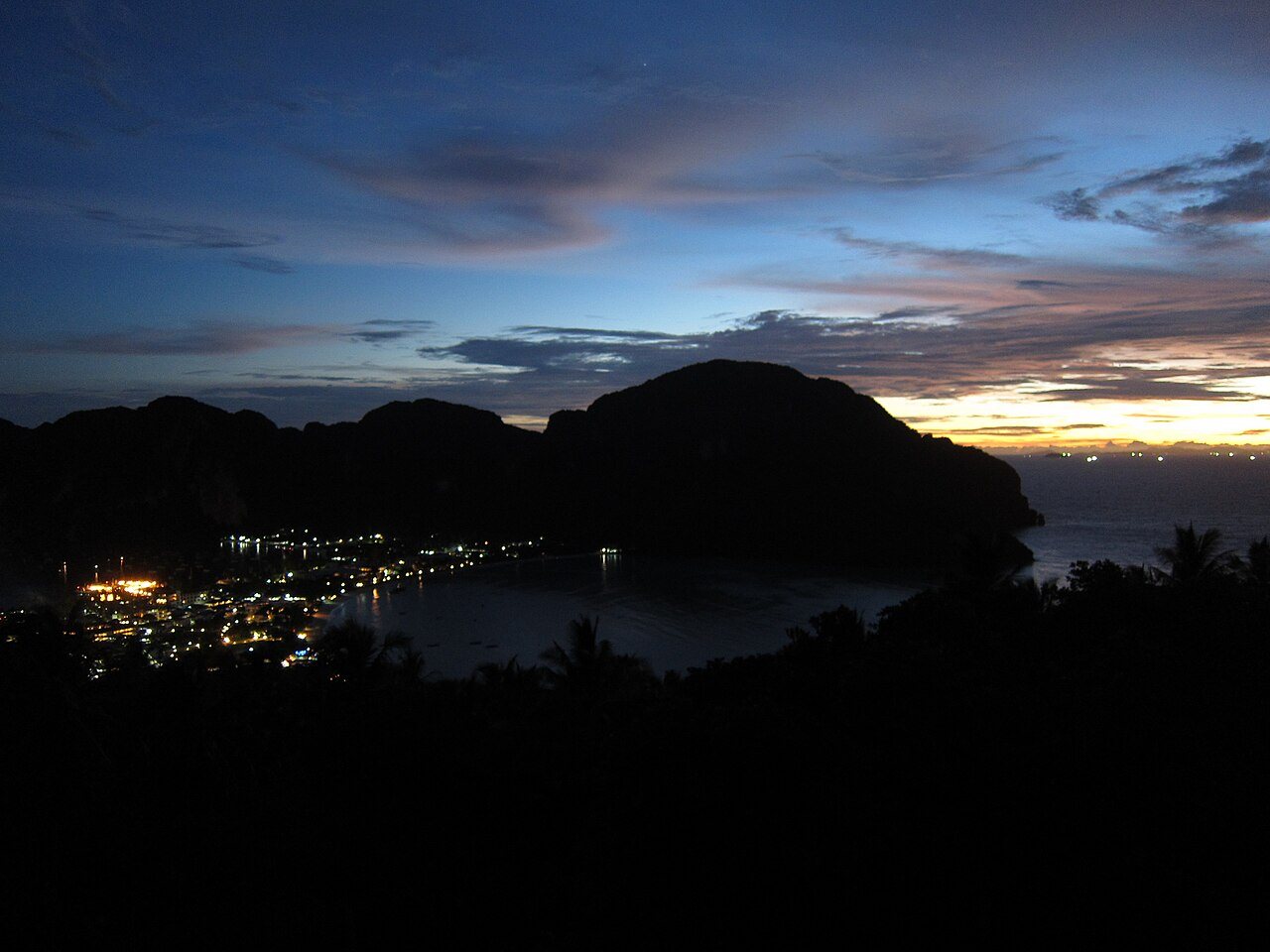
Plankton Phi Phi sightings are real but never guaranteed. On a dark, calm night the water can flash blue around your hands and legs as you swim, and your best chances fall between November and April, in the week either side of a new moon. This guide covers what the glow is, when and where to look, what the sunset tours really offer, and how to keep a night swim safe.
We compared Go Find Orient, Krabi Nature, Andamanda Phuket, Eyeflare, SEAsia.co, Wikipedia, NOAA, Pelago, Time Out and Lonely Planet, and checked a GetYourGuide listing on 30 October 2026. No source we found measures plankton Phi Phi brightness night by night, so read every timing rule below as a probability, and note where the sources disagree.
- Best months
- November to April
- Best moon
- Within about a week of new moon
- Time of night
- After full dark, about 7 pm to midnight
- Next dark window
- 2 to 16 November 2026
- What you see
- Blue flashes where the water moves
- Guaranteed?
- No, on any night
When and where can you see plankton in Phi Phi?
The best chance of seeing plankton Phi Phi style is on a dark, calm night between November and April, within about a week of the new moon, once the sky is fully dark. Sources name Loh Dalum Bay, Long Beach, Ton Sai Bay and Maya Bay, but no spot is reliable. Most visitors join an evening boat tour, from about €26 on the listing we checked.
Plankton Phi Phi at a Glance: What You Will Actually See
The glow is faint, blue and brief. Wikipedia describes bright blue flashes from the plankton Noctiluca scintillans, each lasting about 80 milliseconds, set off when something disturbs the water. In practice you see sparks and trails when you wave a hand, kick your legs or a boat's wake rolls past, not a steady light. Krabi Nature says to let your eyes adjust for a few minutes, and admits that its own sample photos were edited, so the real effect is usually less vivid.
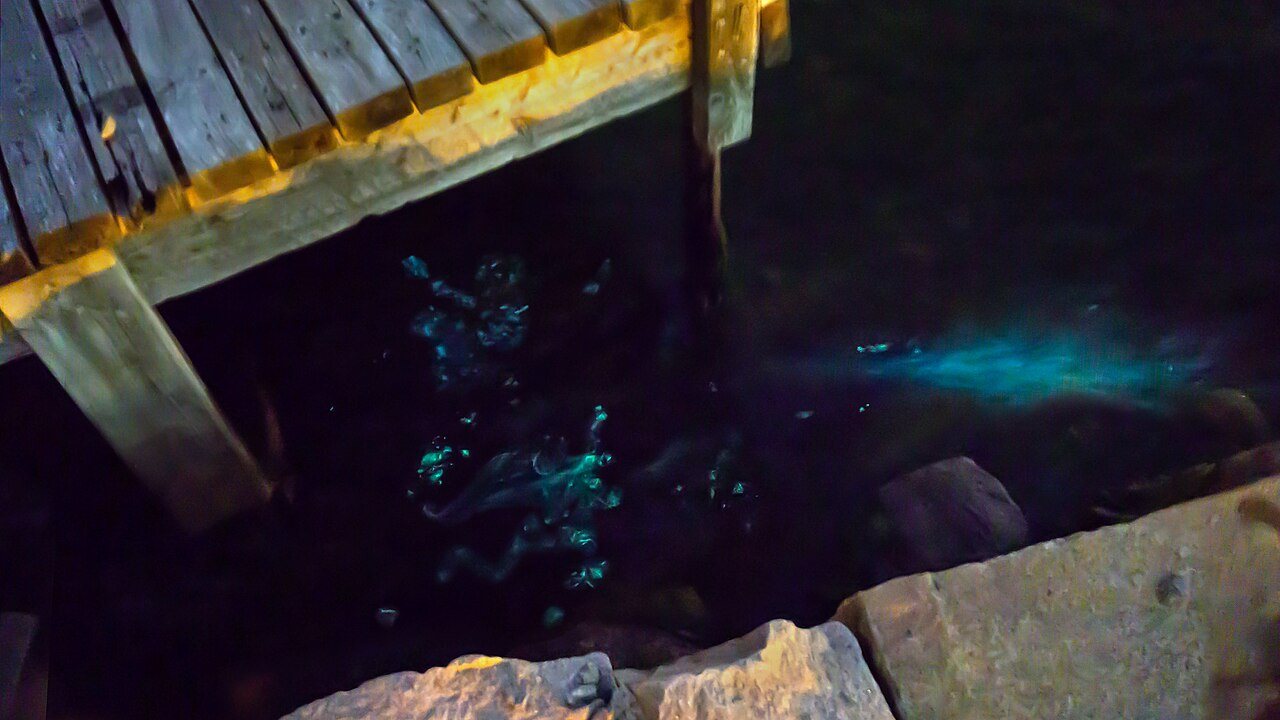
- It needs movement. The water glows when it is disturbed, so you will see it around your hands, your legs and the boat, not across the whole bay.
- It needs darkness. A full moon, bar lights and torches all wash it out, so the dark side of the island and the dark side of the month matter.
- It varies by night. Go Find Orient says sightings depend on the moon, the water, the hour and how much plankton is present, and that they are never guaranteed.
- It is a side dish. On most tours the plankton Phi Phi swim ends a sunset trip, so judge the tour on the whole evening, not only the glow.
Plankton Phi Phi Explained: Why the Water Glows
NOAA defines bioluminescence as light produced by a living organism, and lists the usual reasons: warning or evading predators, luring or finding prey and communicating with the same species. In the warm shallow seas of Southeast Asia, SEAsia.co names dinoflagellates, specifically Noctiluca scintillans, as the main source of glowing beaches. None of the Phi Phi pages we read names the species at Phi Phi, so treat that as likely rather than confirmed.
How the light is made
Each cell is large for plankton, 400 to 1,500 micrometres long according to Wikipedia, so a dense patch looks like fine specks. Mechanical stress, such as the shear from a boat wake or a wave, triggers a chain of changes inside the cell, and an enzyme called luciferase then oxidises a molecule called luciferin to release light. SEAsia.co calls it cold light and describes the flash as a burglar alarm that startles a small predator and makes it visible to larger hunters, but it cites no study, so treat that as a common explanation rather than a proven one.
Is it safe, and does it harm anything?
Wikipedia says the species produces no toxins. The harm comes from dense blooms, which release ammonium and use up oxygen, and which have been linked to fish and invertebrate deaths and to coral loss in a 2019 study in India's Gulf of Mannar. The same page says concentrations above 1.5 million cells per litre turn the water pink or orange by day. Andamanda Phuket, a promotional page, calls swimming in glowing water safe.
SEAsia.co adds that pollution and bright artificial coastal lighting can disrupt plankton populations. That is one reason plankton Phi Phi sightings tend to be best away from the lights of a busy village.
Plankton Phi Phi Season and Moon: When to Go
Season: November to April is the safe bet
Go Find Orient puts the best plankton Phi Phi viewing in the dry season, November to April, and says sightings can happen all year. Krabi Nature agrees on high season from about November to April or May, adds that calm, clear water of 28 to 30°C with no recent storms helps, and warns that September to November can bring fewer boats and rough seas.
Two claims are single-source. Krabi Nature says heavy rain clouds the water while moderate rain may increase the glow, and Andamanda Phuket says some sources suggest April to November can be brighter because of warmer water and nutrients if the weather allows. Jellyfish are most common from May to October, says Go Find Orient, which matters for a swim. Our best time to visit Phi Phi guide compares the months.
Moon: aim for the week around the new moon
Moonlight washes out plankton Phi Phi sightings. Go Find Orient says a full moon can overpower it and Andamanda Phuket says it can make it almost invisible. The sources disagree on how wide the window is: Krabi Nature gives 10 to 12 days either side of the new moon in one section and 5 to 7 days in another, and Andamanda Phuket says a few days. We use about a week either side as a middle course.
| New moon (Thai time) | Darker window, about a week either side |
|---|---|
| Mon 9 November 2026 | 2 to 16 November 2026 |
| Wed 9 December 2026 | 2 to 16 December 2026 |
| Fri 8 January 2027 | 1 to 15 January 2027 |
| Sat 6 February 2027 | 30 January to 13 February 2027 |
| Mon 8 March 2027 | 1 to 15 March 2027 |
| Wed 7 April 2027 | 31 March to 14 April 2027 |
Hour: wait for real darkness
Sources give different hours. Go Find Orient says late evening to midnight, Andamanda Phuket says roughly 7 to 9 pm, and Eyeflare, in an article last updated in 2014, says to go as late as you can on a calm, dry day and away from the lights of bars. A GetYourGuide reviewer says the guide told the group to wait about an hour after the sightseeing ended to see the glow. Plan your plankton Phi Phi swim for once the last light has left the sky.
Where to See Plankton Phi Phi: Bays and Beaches
Go Find Orient names four places for plankton Phi Phi viewing on and around Phi Phi Don and Phi Phi Leh. Andamanda Phuket says the Phi Phi sites are less predictable than the Krabi coast at Railay and Ao Nang. SEAsia.co notes that calm, sheltered bays keep plankton near the shore, which suits plankton Phi Phi viewing in the island's bays.
| Place | What sources say | Watch out for |
|---|---|---|
| Long Beach | Clear, shallow, calm water, called swimmable at night by Go Find Orient | Away from the village, so plan your ride back |
| Loh Dalum Bay | Calm, sheltered and less touristy by day, says Go Find Orient | Beach clubs run on this bay until about 2 am, which adds light |
| Ton Sai Bay | Calm at night, and where many night boats start | Pier and village lights add glare |
| Maya Bay | Some listings sell a sunset plankton swim here | Swimming is banned in Maya Bay, so ask where you will actually swim |
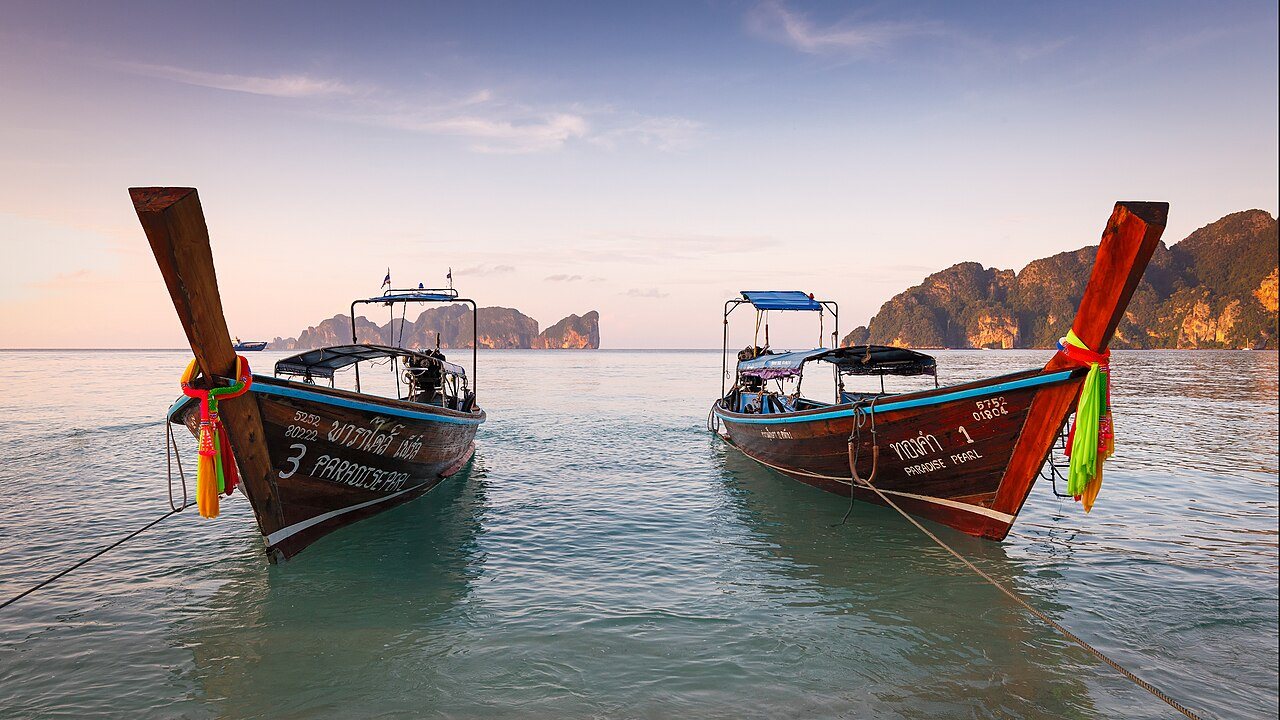
What to know about Maya Bay
Some tours promise a plankton Phi Phi swim in Maya Bay. Time Out reported on 29 September 2026 that the bay reopened on 1 October after its annual closure and that swimming remains prohibited under the park's conservation rules. Lonely Planet described visits in shifts between 10 am and 4 pm, in an article from 2022. Pelago lists Maya Bay as the main plankton Phi Phi site on its sunset tour, with Loh Moo Dee, Pileh Bay, Loh Samah Bay or Monkey Beach as weather alternatives.
Because rules and conditions vary, ask any operator exactly where the swim takes place. Our Maya Bay guide covers the current visiting rules, and our Long Beach guide covers the beach most often named for a night swim.
Plankton Phi Phi Tours: What the Listings Offer
Most visitors see the glow from a boat. The listings fall into three groups: a short evening trip built around the swim, a half-day or full-day tour that ends with a plankton Phi Phi swim after sunset, and a private trip you arrange yourself.
From Phi Phi: Sunset and Bioluminescent Plankton Snorkeling
A longtail trip from Ton Sai Pier past Monkey Beach, Viking Cave, Pileh Lagoon and Loh Samah Bay, with fresh fruit at sunset and a swim among the plankton after dark.
Check on the listing before you book
- Meets at McDonald's PP Island, near Ao Ton Sai Pier
- Boat, life jacket, mask, fruit, water and park fee included
- Not for pregnant women, reduced mobility or high blood pressure
Powered by GetYourGuide. Price, duration and availability depend on your date.
The listing was rated 2.9 out of 5 from 25 reviews when we checked on 30 October 2026, with 3.4 for the guide and 2.6 for value, and showed a price from about €26 per person. That is a weak score. The half-day tour in our things to do in Phi Phi guide is rated 4.7 from 190 reviews, and its afternoon departure also includes a sunset and plankton swim.
What reviewers of this listing report
A reviewer from March 2024 loved the places and the guides' effort but suggested better organisation. A January 2024 reviewer said the boat was very full and that, once the tour ended, the guide said the group had to wait an hour to see the plankton Phi Phi glow, with the option to head back first.
The weaker reviews describe the same problems. A February 2026 reviewer said the tour started 40 minutes late, the guides' English was poor, and the group was taken to a rough channel to wait an hour for the glow in a small longtail without safety equipment, so they cancelled. A March 2025 reviewer called it disorganised and rushed, and a September 2025 reviewer said rain stopped the tour and that they received no reply about a refund. These are individual accounts, but they point to the same weak spots: timing, waiting and conditions at the swim.
Other ways to book
- Half-day and full-day tours. Our things to do in Phi Phi guide, Phi Phi island tour guide and viewpoint guide cover plankton Phi Phi tours that end with sunset. One reviewer of a half-day listing found the plankton less dramatic than the photos, which is common because the glow varies.
- Maya Bay sunset tour. Pelago lists a tour from Tonsai Pier at 3 pm with a Thai dinner around 6:30 pm and a plankton Phi Phi swim in a life jacket. It showed a price of US$62.35, rated 4.3 from 22 reviews, with a four-person minimum. The page contradicts itself on the return time, so confirm before you book.
- Private boat from Krabi. Krabi Nature lists a private boat for up to six people at 3,400 baht, but it is a Krabi operator, not a Phi Phi one, and says some national park islands are not available for plankton tours under recent rule changes.
What to ask before you pay
- Where exactly is the swim, and is it somewhere swimming is allowed?
- What happens if the glow is weak, or the tour is cancelled for weather: a refund, a rebooking or nothing?
- Will everyone wear a life jacket, and can you stay on the boat if the water is rough?
- What time does the boat return? Pelago notes that no ferries run to Phuket or Krabi after its tour, so you will sleep on the island. Our Phi Phi ferry guide has crossing times.
Plankton Phi Phi Night Swim Safety: Jellyfish, Waves and Lights
The plankton Phi Phi glow is harmless, but the setting is not: it is dark, you cannot see what is in the water, and you are often a short boat ride from shore.
- Jellyfish. Go Find Orient says jellyfish are most common from May to October and some, such as box jellyfish, can be dangerous. Eyeflare advises not swimming far out at night where jellyfish are common.
- Group and torch. Eyeflare says to swim in groups, never alone, and to carry a torch to find your way back, in an article last updated in 2014.
- Life jacket. The Pelago tour tells guests to wear one for the swim. Wear one on any tour, even if you swim well.
- Rough water. One reviewer felt unsafe waiting in a rough channel in a small boat. You are entitled to stay aboard and skip the swim.
- Alcohol. Do not swim at night after drinking. Our Phi Phi nightlife guide has drink safety advice for the evening.
In an emergency call the Tourist Police on 1155, medical rescue on 1669 or the police on 191, according to Smartraveller. The GetYourGuide listing excludes pregnant women, people with reduced mobility and people with high blood pressure.
Photographing Plankton Phi Phi: Tips for Seeing More
Andamanda Phuket says smartphones rarely capture the glow and that long exposures and special gear are usually needed. Krabi Nature suggests ISO 400 to 800, a wide aperture of f/2.8 or lower and a wide lens, with a small handheld light, but its sample photos were edited, so expect less on the night. For most visitors the best plan is to enjoy it and photograph the sunset instead.
Switch off the lights
Turn off torches and phone screens, and let your eyes adjust for a few minutes, as Krabi Nature advises.
Stay still, then move gently
Keep still so the plankton can gather, then disturb the water gently with your hands. Hard splashing scatters the glow.
Skip the flash
Krabi Nature says flash can harm the plankton and ruins the photo.
Judge it by eye
Accept that the glow will look fainter than any photo you have seen online.
Responsible Plankton Phi Phi Trips: Sunscreen, Lights and What to Bring
Andamanda Phuket advises avoiding chemical sunscreen before a plankton Phi Phi swim, saying it can be toxic to the organisms, and suggests mineral products with zinc oxide or titanium dioxide. It cites no study, but Thai marine parks already ban four sunscreen ingredients, with fines up to ฿100,000, as reported by Khaosod English and covered in our Phi Phi snorkeling guide. Buy a compliant product before you go.
Keep lights low while you wait and take your litter back to the boat. SEAsia.co says pollution and artificial lighting damage plankton populations, so the way tourists behave on the night affects how bright the glow is next season.
What to bring
- A passport or ID copy, which the GetYourGuide listing asks for
- Swimwear, a towel and a dry layer for the boat ride back
- A compliant, reef-safe sunscreen for the daytime part of the trip
- A bed on Phi Phi for the night, since late boats rarely connect to the mainland ferries
Plankton Phi Phi FAQ
Is there bioluminescent plankton in Phi Phi?
Plankton Phi Phi sightings are reported at Loh Dalum Bay, Long Beach, Ton Sai Bay and Maya Bay, and tours sell it as an evening activity. It is never guaranteed on any night.
What is the best month to see plankton in Phi Phi?
November to April is the best window for plankton Phi Phi sightings, says Go Find Orient. Pick dates within about a week of a new moon: 2 to 16 November 2026 is the next dark window.
Can you see plankton in Phi Phi in the rainy season?
Go Find Orient says sightings can happen all year, but Krabi Nature warns of rough seas and fewer boats from September to November, and a reviewer said rain stopped one tour.
What time is best to see plankton in Phi Phi?
After full darkness. Sources range from about 7 pm to midnight, and one reviewer was told to wait an hour after the sightseeing ended.
Can you swim with plankton in Maya Bay?
Time Out says swimming remains prohibited in Maya Bay under the park's conservation rules, even though some listings advertise a plankton Phi Phi swim there. Ask the operator where you will swim.
Is a plankton tour in Phi Phi worth it?
It depends on the operator and the night. The GetYourGuide listing we checked is rated 2.9 from 25 reviews, so read recent reviews and ask where the swim takes place.
Is it safe to swim in bioluminescent plankton?
The plankton is not toxic, says Wikipedia, but the risks are jellyfish, rough water and darkness, so wear a life jacket and swim in a group.
Do I need to stay overnight on Phi Phi?
Yes, in practice. Pelago notes that no ferries run to Phuket or Krabi after its sunset tour, and Go Find Orient recommends staying overnight.
Want to see the glow from a boat?
Check dates, start times and the price for the sunset longtail trip with a plankton Phi Phi swim, and read the recent reviews before you book.
Photo credits: Ko Phi Phi after sunset by Htkava (CC BY-SA 3.0, Wikimedia Commons); Mareel, bioluminescence in Norra Grundsund harbor by W.carter (CC0, Wikimedia Commons); Long Tail boat Phi Phi Don 04 by Anton Zelenov (CC BY-SA 4.0, Wikimedia Commons). Tour photos: GetYourGuide.
Disclosure: InsideSamui may earn a commission when you book through some of the links on this page, at no extra cost to you. This guide is compiled from published park, operator and traveler information, checked on 30 October 2026. We have not run these trips ourselves for this page. Prices, schedules, fees and rules around Koh Phi Phi change often, so confirm with your operator before you travel. Tour bookings are handled by GetYourGuide. Conditions, rules and tour details change often, so check before you go.